
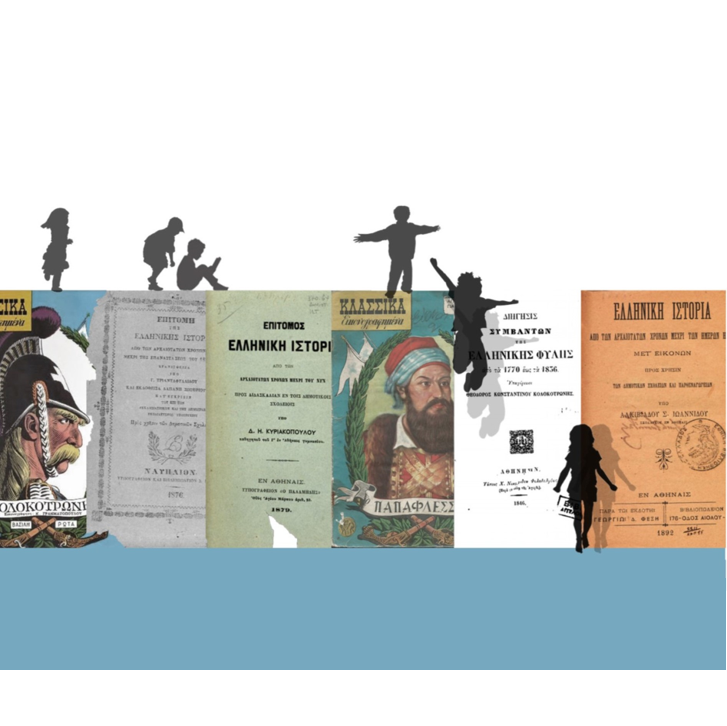
The Greek Revolution, Education and Collective Memory. Transformations of School and Public History
The Lambrakis Foundation, in cooperation with Panteion University and the Group for History Education in Greece, is organising an international online conference entitled “The Greek Revolution, Education and Collective Memory. Transformations of School and Public History” on 18–19 February 2021, within the framework of the Initiative 1821–2021.
The Conference, among other topics, will address schools, teachers and teaching methods during the Greek Revolution, as well as the teaching of the Greek Revolution in Greek schools.
The aim of the Conference is threefold: (a) to explore pre-revolutionary forms of education as well as the establishment of the first educational institutions during the Struggle and the Kapodistrian period; (b) to trace the ways in which the Greek Revolution has been taught in Greek schools (primary and secondary education) from 1834 to the present day; and (c) to explore the various forms taken by the memory of the Revolution in public history.
Scientific Committee:
Haris Athanasiadis, Professor, University of Ioannina, Director of the “Public History” Postgraduate Programme, Hellenic Open University
Yannis Kokkonas, Professor, Department of Archives and Library Science, Ionian University
Christina Koulouri, Professor of Modern & Contemporary History, President of the Department of Political Science & History, Panteion University
Kostas Lappas, Research Director, Research Centre for Medieval and Modern Hellenism, Academy of Athens
Vasiliki Sakka, Dr of Educational Policy, Coordinator of Educational Work, 3rd PEKES of Attica / Collaborating Teaching Staff at the Hellenic Open University
Watch the first day of the conference online – 18 February:
Watch the second day of the conference online – 19 February:
See the detailed Conference programme below:
Speakers
Christina Koulouri
Christina Koulouri is Professor in Modern and Contemporary History and Rector of Panteion University of Political and Social Sciences (Athens, Greece). She studied at the University of Athens (Department of History and Archaeology), the École des Hautes Études en Sciences Sociales and Paris I - Panthéon - Sorbonne where she also received her PhD. She was Visiting Research Fellow at Princeton University (2017) and at the University of Regensburg (2019). Lecturer at many international conferences in Greece, Western and Southeast Europe, USA, Japan and China, she is also member of the editorial board of refereed academic journals and academic societies. She is author of several books and articles on the teaching of history, the history of historiography, school textbooks, national identity, public history and the history of sports and the Olympic Games. She is also the editor of six workbooks (alternative educational materials) for the teaching of modern and contemporary history in Southeast Europe.
Joep Leerssen
Joep Leerssen was born in Leiden in 1955 and studied in Aachen, Dublin and Toronto. He is Professor of European Studies at the University of Amsterdam. He has widely published on the interaction between the history of political ideas and literary/cultural history. His initial research was on the history of Irish nationalism (Mere Irish & Fíor-Ghael, 1986; Remembrance and Imagination; Parnell and his times, 2020) and on the theory of national (self-)stereotyping (Imagology, co-edited w. Manfred Beller, 2007). He has since then worked on a comparative history of cultural nationalism in 19th-century Europe (National Thought in Europe, 3rd ed. 2016, Encyclopedia of Romantic Nationalism in Europe, 2018). For this work he received the Spinoza Prize (the premier Dutch scientific award, 2008) and the Madame de Staël Prize for Cultural Values (2020).
Mirela Murgescu
Mirela-Luminiţa Murgescu is a professor in the Faculty of History at the University of Bucharest. She has participated in several international projects related to textbook analysis, nationalism, memory, social and cultural history. She was a recipient of a Mellon Fellowship in 2000, a DAAD Fellowship, also in 2000, a Korber Senior Fellowship in 2006 from the Institut für die Wissenschaften vom Menschen in Vienna. She has conducted various research stages at MSH Paris (2003-2005), and GWZO Leipzig (2010). Selected publications: Între "bunul creştin" şi "bravul român". Rolul şcolii primare în construirea identităţii naţionale româneşti (1831-1878) [Between the "Good Christian" and the "Brave Romanian". The role of elementary school in constructing the Romanian national identity (1831-1878)], Iaşi: Editura A´92 1999 (German edition: Vom „guten Christen“ zum „tapferen Rumänen“. Die Rolle der Primarschule bei der Herausbildung des rumänischen Nationalbewusstseins 1831–1878, Berlin: Frank&Timme Verlag 2012); (ed.) Nations and states in Southeast Europe, Thessaloniki: CDRSEE 2005; ‘Memory in Romanian history: textbooks in the 1990s’ in M. Todorova (ed.) Balkan identities : nation and memory, London: Hurst 2004, pp.339-354; Istoria din ghiozdan. Memorie şi manuale şcolare în România anilor 1990 [History from the school bag. Memory and schoolbooks in Romania during the 1990s], Bucureşti: Domino 2004; ‘Rewriting School Textbooks as a Tool of Understanding and Stability’ in D. A. Sotiropoulos & T. Veremis (eds.) Is Southeastern Europe doomed to instability? A regional perspective, London: Frank Cass 2002, pp. 90- 105; ‘Memory and History - a Challenge for Young Europeans. Report about the 1989 – images of change competition organized by EUSTORY’, in Oliver Rathkolb (ed.), How to (Re) Write European History. History and Text Book Projects in Retrospect, Innsbruck: Studien Verlag 2010, pp. 219-240; ‘Transition, Transitions: The Conceptualization of Change in Romanian Culture’ in Victor Neumann, Armin Heinen (eds.), Key Concepts of Romanian History. Alternative Approaches to Socio-Political Languages, Budapest-New York: CEU Press 2013, pp.423-452 (co-author); ‘Multiple roads to sacralization? Stephen the Great in Communist historical films and his post communist sanctification’ in Agnieszka Gąsior, Agnieszka Halemba, Stefan Troebst, Gebrochene Kontinuitäten. Transnationalität in den Erinnerungskulturen Ostmitteleuropas im 20. Jahrhundert, Köln, Weimar, Wien: Böhlau Verlag 2014, p. 185-198; Romania, in Luigi Cajani, Simone Lassig, Maria Repoussi, The Palgrave Handbook of Conflict and History Eduction in the Post-Cold War Era, Palgrave, Macmillan, 2019, p. 487-499.
Irena Stefoska
-
Esra Özsüer
Associate Professor Esra Özsüer received her Ph.D in Political Science and History at Panteion University in Athens in 2015. Her Ph.D. thesis was published by Periplus Publishing House in 2016 with the title of “The Other Side of the Coin: Creating Historical Myths in Turkish and Greek Books for Children's Community”. Also in 2018 her other work “Türkokratia. Turkish Image in Europe” has been published in Kronik Publications. In 2014, she got a history certificate from the Modern Greek History and Greek Enlightenment Period which organized by the University of Athens. Between 1999-2016 as a student with scholarship in Athens, Thessaloniki and Rhodes, continued to academic studies. She has a post-doctoral dissertation as a visiting scholar in Asia Minor Research Centre in Athens. She has been working at Istanbul University since 2004. She has been carrying out comparative studies on Turkish-Greek Political History, Islamophobia, “Other”, Identity, Image, Propaganda, National Struggle, and Population Exchange. She has many published articles, papers and book chapters. She knows fluent Greek and intermediate English.
Pavlos M. Pavlou
Dr. Pavlos M. Pavlou was born in Nicosia-Cyprus, in 1959. After his graduation from the University of Athens (Philosophical School) in 1984 he pursued post graduate studies in Modern and Contemporary History, at the Universities of Athens and Cyprus. He is the author and co-author of several books and scientific articles, in Cyprus and Greece. He successfully completed his PhD studies in 2014, and his PhD thesis (“State, Ideology, Politics, and Education in Cyprus 1959-1974”) was published by the Papazisis Publishers (Athens), in 2015. Since 1995 he teaches in Cyprus public schools of secondary education. Since 2014, he is a Scientific Collaborator of Modern-Contemporary History and History of Education at the European University of Cyprus. He is an active member of several organizations of the civil society – many of them have as their main goal the facilitation of the educational progress. He is also president of the executive board of the Association for Social Reform, in Cyprus.
Harris Athanasiades
Harris Athanasiades is a professor of History of education and Public History at the University of Ioannina (Greece). His research focuses on the social controversy concerning the relation between schooling and nation. Typical, in this respect, are his following publications in English: “Liberals, Conservatives and Romantic Nationalists in interwar education policy in Greece: The High Mountains episode”, History of Education, vol. 44, (1), 2015, pp. 64-82; “The ‘Nation-killing’ textbook. The polemic over the history textbook ‘In modern and contemporary times’ (2006-2007)”, Ricerche Storiche, vol. 44, (1), 2014, pp. 101-120. His latest book is titled: The Withdrawn Books: Nation and School-history in Greece, 1858-2008, 3rd edit: Alexandria Publications, Athens 2018 [in Greek].
Yannis Kokkonas
Yannis Kokkonas is a philologist and historian specialising in Book History and Bibliology. He has also studied aspects of the history of the Greek national idea, the Greek national movement and the Greek War of Independence, the conflicts over Greek language during the Enlightenment, and public education in the early years of the Greek State. He has taught in State high schools and since 2003 has been a professor at the Ionian University. He recently edited the memoirs of the Greek shadow puppeteer Sotiris Spatharis.
Costas Lappas
Costas Lappas was born in 1948, he studied at the University of Athens (Department of History and Archeology) and did postgraduate studies in Paris. His interests and publications focus mainly on the history of modern Greek culture during the 18th and 19th centuries. He was a researcher and director at the Research Center of Medieval and Modern Hellenism of the Academy of Athens.
Vassiliki Sakka
· Studied History and Archaeology (University of Athens)
· M.A.: History Didactics (University of Athens)
· Phd: History and Adult Education (University of Peloponnese)
· Worked as a History and Language Teacher, as School Advisor and Teacher Trainer (Secondary Education), as a lectured in Hellenic Open University-E.A.P. (Post Graduate Course Public History)
· Research on History Teachers Attitudes, Public History and History Didactics (Articles, publication, seminars, co-operation with CoE, Universities, History Teachers’ Associations and NGOs)
· Ex EUROCLIO (European Association of History Educators) President
· Association for History Education in Greece (A.H.E.G) President
Marios Livieratos
Marios Livieratos is a graduate of the Department of History and Archaeology of the National and Kapodistrian University of Athens (2000) with a postgraduate degree in Modern and Contemporary History from Panteion University (2020). From 2003 to 2007 he worked as a philologist in private education and from 2007 until today he serves as a permanent teacher in public secondary schools (written competition ASEP 2006). During this period he has organized and implemented educational programmes of historical and cultural content.
Angelos Palikidis
Dr Angelos Palikidis is Assistant Professor of History Didactics at the Department of History & Ethnology and Director of the Laboratory of Research, Technology and Applications in Education at Democritus University of Thrace (Greece). He is co-author of the Greek History Curricula and expert of History Education at the Council of Europe. He is member of domestic and international associations on History Education and Social Science. He teaches History Didactics, Art History in History Teaching, Theory and Teaching Methodology of Local History and Public History. His main research interests are: Art History and Historical Pictures in History Teaching, Museum History Education, History Textbooks and Curricula, Local History, Teaching Historical Trauma and Controversial Historical Issues. Related works: (a) The role of image in the history textbooks of Secondary Education (1950-2000). Didactic, ideological and aesthetic functions, Kyriakides Editions, Thessaloniki 2009, (b) Art and historical consciousness in 19th century Greece (to be published in 2021).
Dora Markatou
Former Associate Professor Markatou Theodora (Dora) studied in Athens (degree of History and Archaeology and degree of Byzantines and Neohellenic Studies), History of Art in Heidelberg/Germany and she has a Doctorate in History of Art from the University of Thessaloniki/ Department of History and Archaeology. Her research interests include the Art of 18th-20th centuries, with emphasis in sculpture and public Monuments, in the art of the Ionian Islands (18th-19th centuries) and the irrelations of art, society and politics.
She taught History of Art at the University of Patras/Department of Drama Studies as well as at the University of Ioannina /Department of History and Archaeology.
Dimitris Pavlopoulos
Dimitris Pavlopoulos (Athens 1966) studied at the Department of History and Archaeology of the School of Philosophy of the National and Kapodistrian University of Athens, where he teaches (cognitive subject: History of Art with emphasis on Modern Art). He worked as a curator at the Museum of the City of Athens. Obsessive fields of research interest constitute the newest Greek sculpture, engraving and typography. He has written books, the selection of which are: Michalis Tombros in the Collection of the Vasilis and Eliza Goulandris Foundation (2006), Zongolopoulos (2007), Sorongas (2008); Prints - Graphic Arts. History - Techniques - Methods - Terms Glossaries (32011), Work Preparation Guide. From Theory to Application (2017), From the Sacred Band to Constantine XII. Modern Athenian Sculptures (2020). He has also published a number of related articles.
Georgia Antonopoulou
Georgia Antonopoulou, Art Historian PhD, Head Manager of the Athens Municipal Historical Archives. She has studied History and Archaeology at the University of Athens. Her postgraduate studies at the School of Architecture of the National Technical University of Athens concern the maintenance and restoration of historical buildings and complexes. In 2014, she completed her doctoral dissertation at the University of Athens on the life and work of the Greek sculptor Yannis Pappas.
She has worked for seventeen years at the Municipality of Athens - Department of Architecture, for the recording, documentation and preservation of the city's monumental sculptures and funerary monuments.During that period, she conducted research and took part in pilot and European projects. Over the last seven years she is in charge of the Historical Archives of the Municipality of Athens. She is also the curator of "The Yannis Pappas Studio" at the Benaki Museum.
Her scientific work includes announcements in conferences, lectures, monographs, articles in collective works and scientific journals. Her reseach interests focus on modern Greek art and history, public space and cultural heritage management.
Michael Giochalas
Michael Giochalas was born in Athens, in 1986. He studied history and archaeology in the National and Capodistrian University of Athens and classical singing as a baritone in Filippos Nakas conservatory. He continued with a Master in Modern Greek Art and supported his thesis on the sculpture of the Cemetery of Resurrection, in Piraeus. As part of his Master, he participated in a program involving around tours open to the public in the Neoclassical Trilogy of Athens (University of Athens, Academy of Athens, National Library of Greece) and, in collaboration with the University of Athens Property Development and Management Company, he worked as a tour guide in the University of Athens, from 2018 until 2020. In 2019 he started his PHD studies, on the sculpture of the First Cemetery of Athens. He has participated with announcements in the Symposia of the Faculty of History and Archaeology and in international conferences.
Vangelis Karamanolakis
Vangelis Karamanolakis is Assosiate Professor in Theory and History ofHistoriography at the National and Kapodristian University of Athens (NKUA). He is, also President of the Historical Archive (NKUA) and Vice President of the Society’s Board of Directors of the Contemporary Social History Archives. He has taught at the universities of Crete, Athens, Panteion (Greece). He has published several books and articles about theory of history, Greek historiography, memory studies, history of dictatorship (1967-1974), history of institutions, archival research and psychiatric institutions. His last book: Ανεπιθύμητο παρελθόν. Οι φάκελοι κοινωνικών φρονημάτων και η καταστροφή τους (Αύγουστος 1989) [An Unwanted Past. The Files of Social Convictions and their Destruction (1989)], Athens 2019.
Panagiotis Stathis
Panagiotis Stathis graduated from the Department of History and Archeology of the University of Athens. He now elaborates a PhD thesis in the Department of History and Archaeology of the University of Crete. The theme of his thesis is the historiography of the Greek Revolution of 1821. He has worked at the Historical Archives of the Agricultural Bank of Greece, the Historical Archive of the University of Crete and the Closed Section of the University of Crete Library. He has taught modern Greek history at the Crete School of Tourist Guides of the Organization of Tourism Education and Training. His main research interests concern the following thematic areas: history of the Greek Revolution of 1821, history and historiography of banditry, history of Greek nationalism, history of the Greek historiography. On the above mentioned historical domains he has published several articles in Greek historical journals and collected volumes.
Eleni Kouki
Eleni Kouki’s field of expertise is the history of post-war Greece, and especially the period of the Greek dictatorship of the 21st April (1967-1974) with a particular interest in the study of rituals, commemorations, in general, the phenomenon of memory, as well as the channels that form it, both material (monuments, photographs, etc.) and immaterial (institutions, narratives, etc.). Currently, she teaches at the Public History MA Program of the Hellenic Open University.